
From Data to Action: Introducing HDRN Canada Discussion Sessions

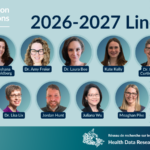
Who is shaping the future of health data in Canada? What new ideas and approaches are emerging? Where can health data make the greatest difference for people and communities? Most importantly, how can we turn data and evidence into better research, health systems, care and outcomes?
These questions are at the heart of HDRN Canada Discussion Sessions, a new monthly webinar series bringing together experts from across HDRN Canada’s network and the broader health data community to share insights, practical tools and emerging approaches. The series creates a space to share ideas, tools and emerging approaches across topics ranging from distributed analysis and synthetic data to connected care, privacy and data harmonization. “We launched Discussion Sessions to demonstrate the breadth of Canada’s health data community and the possibilities that emerge when expertise, data and ideas are shared,” said Dr. Kim McGrail, HDRN Canada’s Scientific Director and CEO.
We launched Discussion Sessions to demonstrate the breadth of Canada’s health data community and the possibilities that emerge when expertise, data and ideas are shared. ~ Dr. Kim McGrail
Held on the third Wednesday of each month, sessions explore how linked population data can inform research, improve health systems, strengthen health outcomes and advance health equity, and ask important questions informing emerging research.
Understanding where older adults are aging together
What if we could identify the communities where older adults are already aging together—and use that knowledge to better plan services and support healthy aging? Tai Huynh and Dr. Shoshana Hahn-Goldberg will kick off the new series with a discussion of their research into Naturally Occurring Retirement Communities (NORC) Registry. They explain how linking health administrative data to the registry can provide unprecedented insights into health service use, aging trajectories and how best to support older adults in the communities they call home.
Turning IDEA into action
How can data organizations shift inclusion, diversity, equity and accessibility (IDEA) from principles into practice? Dr. Amy Freier, Kate Kelly and Dr. Laura Bowler will introduce three new tools developed from HDRN Canada’s IDEA Strategy: the Unlearning Club Curriculum, IDEA Benchmarking Tool, and Core Questions Reflection Tool. Learn more about these open source tools, designed to help data administrators, organizations and researchers incorporate IDEA into their work—from foundational learning and organizational planning to the earliest stages of project design.
Strengthening privacy and responsible data use
Responsible health data use requires a strong foundation in privacy and ethics. HDRN Canada’s new Protecting Personal Information e-learning course provides a pan-Canadian introduction to privacy and ethics in the secondary use of administrative health data. Dr. Donna Curtis Maillet and Dr. Bethany Jones will introduce the new course, designed for a broad audience, including students, analysts, data stewards, researchers, review committee members and members of the public interested in learning about the health data life cycle, personal and personal health information, data ethics and emerging privacy considerations.
Connecting data—and advancing reconciliation
Other Discussion Sessions look at the infrastructure and collaboration needed to make health data more useful across jurisdictions. Dr. Lisa Lix and Dr. Georgina Archbold will explore HDRN Canada’s multi-site initiative to implement the Observational Medical Outcomes Partnership (OMOP) Common Data Model across provincial data centres, alongside the launch of a Canadian chapter of OHDSI. The initiative aims to improve data quality and interoperability while supporting more reproducible real-world evidence generation across Canada.
The series also turns its attention to reconciliation. Meaghan Pike and Victoria Martinez of HDRN Canada’s First Nations, Inuit and Métis Data Practices Team will share findings from a review of four Indigenous-led reports and examine how HDRN Canada’s work aligns with recommendations and Calls to Action. The discussion will explore opportunities for meaningful action, learning and collaboration—and how this approach could offer a model for other health data organizations.
HDRN Canada Discussion Sessions are open to the health data community and anyone interested in how population data can contribute to better research, policy, care and outcomes for Canadians. Check out the full lineup and register for sessions.