
HDRN Canada showcases privacy e-learning course for Data Privacy Week


HDRN Canada will celebrate Data Privacy Week, taking place January 26 – 30, by showcasing its new administrative data privacy training course for researchers, students and members of the public.
Developed by HDRN Canada’s Privacy Team, the e-learning course prioritizes a “privacy by design” approach—the theme of this year’s Data Privacy Week. Privacy by design is a methodology that proactively embeds privacy into the design of IT systems, business practices and networked infrastructure, making data privacy and protection the default feature. “HDRN Canada prioritizes privacy by design as a core value and working principle,” said Privacy Team Chair Dr. Donna Curtis Maillet. “Not only does prioritizing privacy by design encourage compliance with privacy law, it helps build trust with Canadians, who can have confidence that their data are safe and secure.” Public confidence in health data access and use is essential to realize the significant potential of health data to support a robust and effective health research ecosystem, as research conducted by HDRN Canada found
Dr. Curtis Maillet pointed to HDRN Canada’s work with Trusted Research Environments (TREs), including the development of a best practices guidance document, as one way the network prioritizes privacy by design. TREs are highly secure computing environments that provide protected research access to personal data and personal health data. Developing and providing training is another way to promote privacy by design, she continued. The new e-learning course, Protecting Personal Information: Foundations in Data Privacy and Ethics for Personal and Personal Health Information in Research, was designed to get learners thinking about privacy through the entire data life cycle. “It covers concepts necessary to empower individuals with an understanding of how personal health information, in the form of administrative data, is accessed, used and disclosed in health research across Canada,” Dr. Curtis Maillet said.
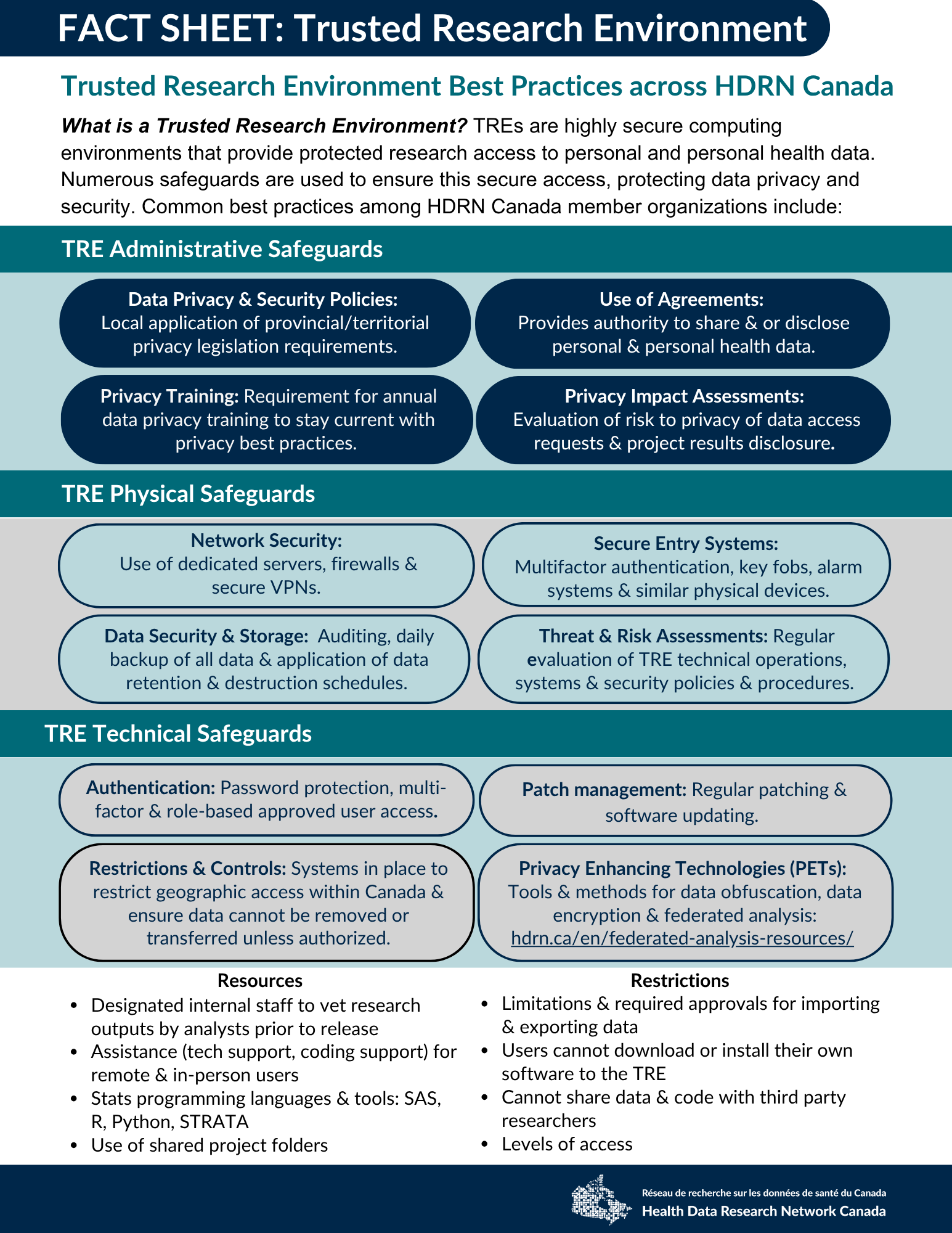
Created for a broad audience, including the general public, data access review committees, research ethics boards and public/patient partners, the course tells an administrative data privacy story that moves progressively through topics related to data privacy, security and ethics. “It emphasizes the administrative, technical and physical safeguards in place to address the challenges experienced while balancing the privacy rights of individuals, legislative requirements, standards and best practices with the need to facilitate robust, evidence-informed health research,” noted Dr. Bethany Jones, who worked closely with the Privacy Team to develop the course.
Training opportunities like HDRN Canada’s privacy e-learning course, are an important means of building a strong privacy by design foundation, Dr. Curtis Maillet added. “Not only does it facilitate engagement in personal health data research, especially pan-Canadian multi-regional research, it contributes to the development and adoption of beneficial solutions to secondary access to personal health data for research.”
Highlights of the course include interviews with Privacy Team members from across HDRN Canada sharing their expertise, knowledge checks throughout, key resources and a final quiz. After beta testing, the course will be rolled out across the country.